|
Chapter 5 - Review of Performance on Green Policy
CAD's green policy is energy conservation, paper conservation, recycling, proper disposal of environmentally hazardous waste and provision of awareness training for staff.
Energy Conservation
Conserving Electricity by Energy Saving Initiatives
Buildings Managed by CAD
In buildings and premises managed by CAD, such as the Air Traffic Control Complex and Tower (ATCX/TWR) and Back-up Air Traffic Control Complex (BATCX), we have implemented a number of measures to save energy.
Energy Saving on Air-conditioning system:
Air-conditioning system is the major electricity consumption sector in CAD's premises. In 2005, we implemented the following measures in our air-conditioning system to save energy:
- keeping the setting of room thermostat at a suitable temperature;
- modifying power supply to chiller system of ATCX/TWR to minimize the use of air-cooled chiller;
- acquiring standby heat plates to reduce maintenance time for the water-cooled chiller at BATCX;
- using Polarized Refrigerant Oil Additives (PROA) for one water-cooled chiller at BATCX;.
- switching off fan coil units at corridors of BATCX; and
- switching off fresh air units during day time in additional to night time at BATCX.
In 2006, we will introduce PROA to the air-conditioning units of our outstations to further save energy.
Energy Saving on Lighting System:
In 2005, we have continued to implement the following measures:
- switching off the outdoor architectural floodlights at BATCX; and
- switching off part of the corridor lightings at ATCX/TWR and BATCX.
In 2006, we will implement the following measures to further save energy:
- replacing traditional exit signs at ATCX/TWR and BATCX with LED exit signs; and
- replacing existing T8 fluorescent light tubes at ATCX/TWR and at the offices in Airport Freight Forwarding Centre with T5 tubes.
Energy Saving on Lift System:
In 2005, we have continued to suspend one passenger lift and one cargo lift at ATCX during non-office hours.
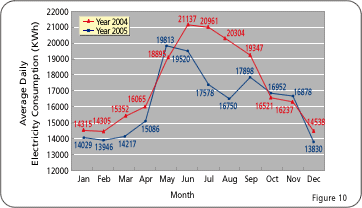
As a result of the implementation of various energy conservation measures, the average daily electricity consumption in the ATCX/TWR in 2005 decreased by 5.6% comparing to the year of 2004 (Figure 10).
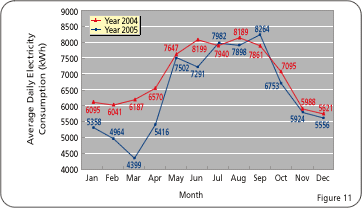
The average daily electricity consumption in the BATCX recorded a decrease of 7.3% in 2005 comparing to the year of 2004 (Figure 11). We shall see if there are rooms for adopting further energy saving measures.
CAD Offices Managed by Other Organizations
We would regularly convey our concerns about exploring energy saving initiatives to the building managers of other CAD offices. Besides, we have given the building management of Queensway Government Offices our full support on the energy saving initiatives such as controlling indoor temperature at a reasonable level and shortening the operation hours of air conditioning chiller plant by the Government Property Agency.
Targets for 2005 and 2006
The total electricity consumption in all CAD premises in 2005 was 30,452 kilowatt-hours on average daily. It represented 4.2% reduction from that of 2004 and 1.4% from that of 2002.
In the year of 2006, we will continue to follow the guidelines of the Environment, Transport and Works Bureau and target to reduce the electricity consumption by 6.0% from that of the year of 2002.
Conserving Fuel
Poor driving habit not only increases fuel consumption, but also causes more pollutants to be emitted. We thus provide information on eco-driving to our drivers to remind them to drive and maintain vehicles properly so as to reduce fuel consumption and pollution.
Purchasing Energy Efficient Equipment
Air Traffic Control Equipment
To support Government's drive for energy saving, we have purchased air traffic control equipment of high standard of energy efficiency to save electricity.
Other Equipment
We are obliged to observe guidelines from the Government on green purchasing and taking environmental considerations into account when procuring goods and services. Environmental terms such as high standard of recyclability and energy efficiency have been included in our tender specifications whenever applicable.
Targets for 2005 and 2006
In 2006, we shall continue to take environmental considerations into account when procuring goods and services. When appropriate, we will procure equipment and services which are of high standard of energy efficiency and are amicable to the environment.
In 2006, we shall complete the replacement of all standard cathode-ray-tube (CRT) displays by the state-of-the-art LCD displays for the Air Traffic Management Systems
We will continue to evaluate and identify suitable state-of-the-art LCD displays to replace the special high resolution 28-inch CRT d isplays for the Radar Data Processing and Display System.
Paper Conservation
We encourage staff to implement different green measures for reducing paper consumption.
It is our continuous target to reduce paper consumption by encouraging staff to implement various green measures such as communicating by e-mail, printing on both sides of paper and using double-side photocopier / printer. In addition, the use of the Document Management System enables information such as posting circulars, departmental circulars and telephone lists be disseminated electronically. As a result, paper circulation within CAD has been reduced.
Targets for 2005 and 2006
In the year of 2005, we consumed 6444 reams of paper (Figure 12).
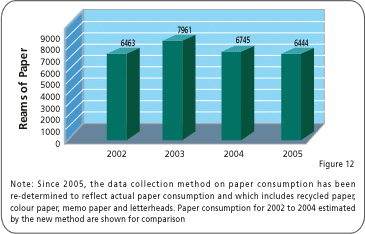
In 2006, we will continue our efforts in promoting electronic communication among staff. In addition, we will follow the guidelines of Environment, Transport and Works Bureau on reducing paper consumption and endeavor to reduce the consumption by 10.0% from the 2002 figure.
Recycle
We implement waste paper, used CD and laser printer cartridge recycling schemes to save the Earth's natural resources.
Waste Paper
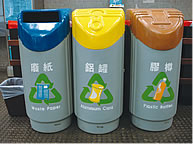
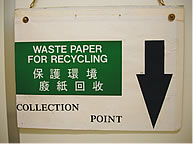
Our staff would separately dispose of recyclable waste paper in conveniently located recycling bins. CAD's cleaning contractors then transport those papers to designated locations for recycling (Table 1).
Table 1
|
|
|
2004
|
2005
|
|
|
|
|
|
|
Waste Paper Collection (Kg)
|
|
6337
|
5654
|
Used CD
Since November 2004, CAD has launched a programme for collection of used CD for recycling. CAD then forwards those CDs to designated collection point for recycling.
Table 2
|
|
|
2004
|
2005
|
|
|
|
|
|
|
Used CD Collection(g)
|
|
-
|
10,264
|
Laser Printer Cartridges
We return used laser printer cartridges to our suppliers for recycling. (Table 3)
Table 3
|
|
|
2002
|
2003
|
2004
|
2005
|
|
|
|
|
|
|
|
|
Laser Printer Cartridge
|
|
Purchased
|
Purchased
|
Purchased
|
Purchased
|
|
|
|
|
|
|
|
167 units
|
88 units
|
116 units
|
142 units
|
|
|
|
|
|
|
Recycled
|
Recycled
|
Recycled
|
Recycled
|
|
|
|
|
|
|
124 units
|
269 units
|
271 units
|
294 units
|
Targets for 2005 and 2006
Our target for 2006 is to continue our efforts in recycling waste papers, used CDs and printer cartridges.
Proper Disposal of Environmentally Hazardous Waste
Compliance with the environmental regulations with regard to the disposal of chemical waste.
Chemical Waste Disposal
Air traffic control equipment located in 13 equipment outstations are essential to maintain the air traffic operation. When the normal city mains supply to these equipment is interrupted, the equipment will automatically and immediately switch to operate on power supply from standby diesel generator and sealed-type battery. The used engine lubrication oil of the standby generators and the battery fluid are chemical waste that required proper disposal.
Targets for 2005 and 2006
In the year of 2005, our maintenance contractor has handled the waste in accordance with the statutory requirements under the Waste Disposal (Chemical Waste) (General) Regulation of the Waste Disposal Ordinance (Chapter 354 subsidiary legislation C). Supervision on our contractor will be continued to ensure their proper handling and disposal of chemical waste in the year of 2006.
Discharge of Sea Water Effluent
Our ATCX/TWR and BATCX use sea water for their cooling systems. We ensure that the sea water effluent is discharged in compliance with the requirements set under the Water Pollution Control Ordinance (Chapter 358).
Targets for 2005 and 2006
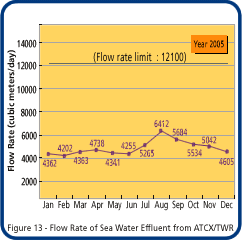
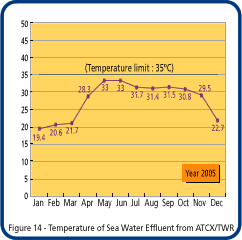
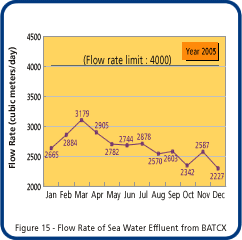
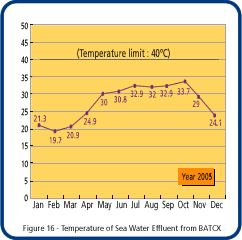
As in the year of 2004, our monthly measurement of the flow rate, temperature, pH value and residual chlorine level of the sea water effluent from ATCX/TWR and BATCX shows that the limits of these four control parameters were not exceeded in 2005. In 2006, we will continue to monitor all these parameters. (Figures 13 to 16 present the monthly variation of the flow rate and temperature of the seawater discharged.)
Staff Training on Environmental Issues
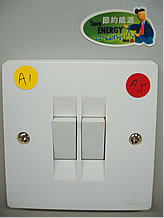
Throughout 2005, we have used various means to familiarize our staff with the importance of energy conservation and our green measures. Also, we have displayed publicity materials on energy saving at conspicuous locations to remind them to be environmentally responsible.
|